

Roof Update-April 2026

Roof Restoration Project
Following the completion of the first phase of works on the Porte Cochere in Autumn 2025, work began on the construction of the scaffolding to allow access to the main part of the building. This phase of the project will last for approximately five years. The aim is the same as for the first phase of the project; to conserve the existing stonework, replacing it where necessary and fully replacing the lead sheeting on the flat roof. What is replaced, what is removed and what is left alone is decided by balancing conservation, pragmatism and future proofing in terms of cost.
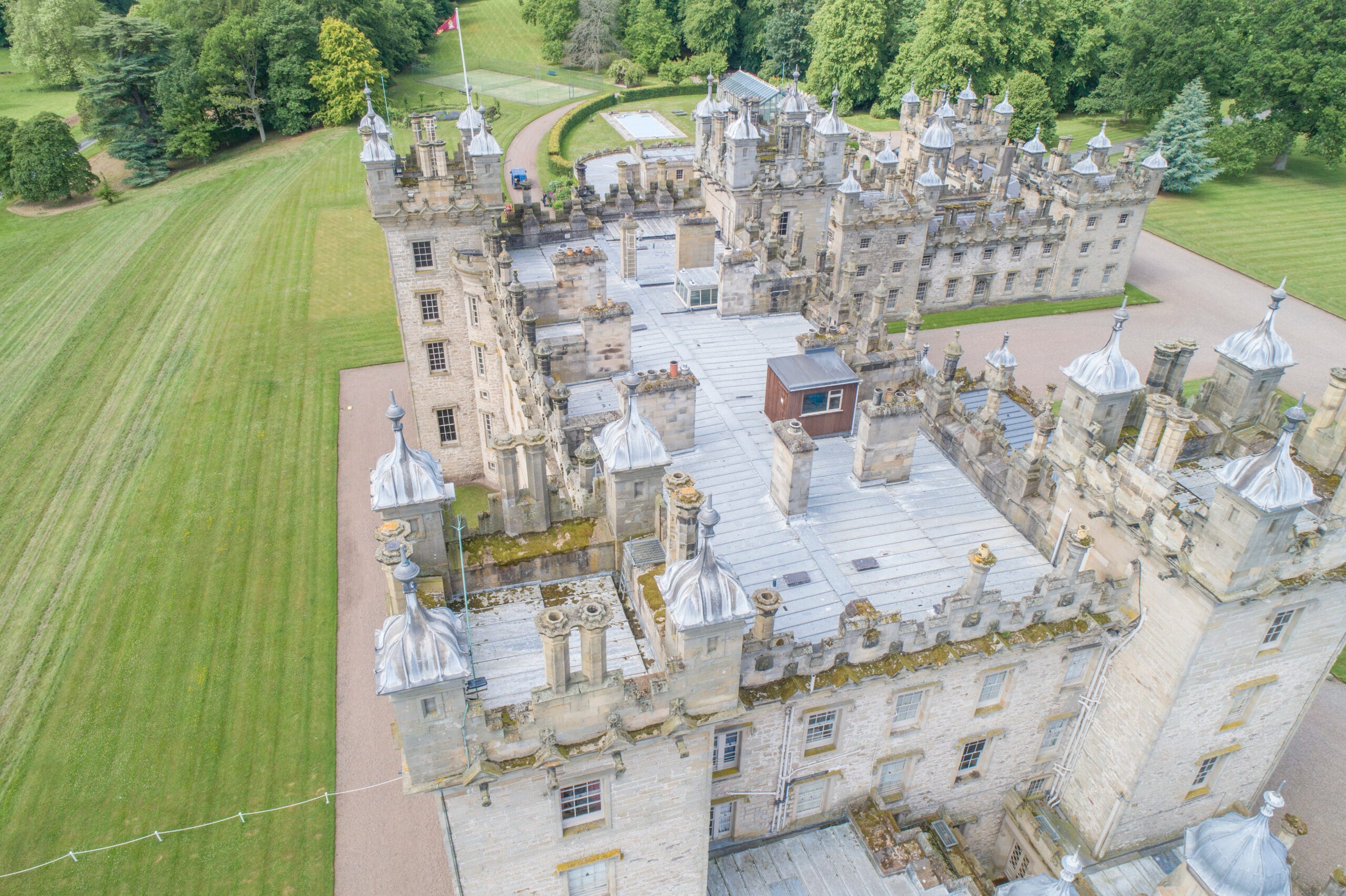
The area of focus for the next four to five years is the substantial central part of the Castle roof shown above. Many of the towers, chimneys and carvings here are in need of attention, as there has not been a significant programme of remedial work carried out here since the latter part of the 19th century. The work has a number of important aims, all of which are vital for preserving Floors Castle for generations to come. It is not just about the maintenance of the structure, but the preservation of the legacy of this magnificent building, preserving the longevity of the stone by slowing the rate of erosion and degradation. The work will greatly reduce the risk of stone falling, as well as improve drainage, moving water away from the vulnerable parts of the building and preventing damage from water ingress.
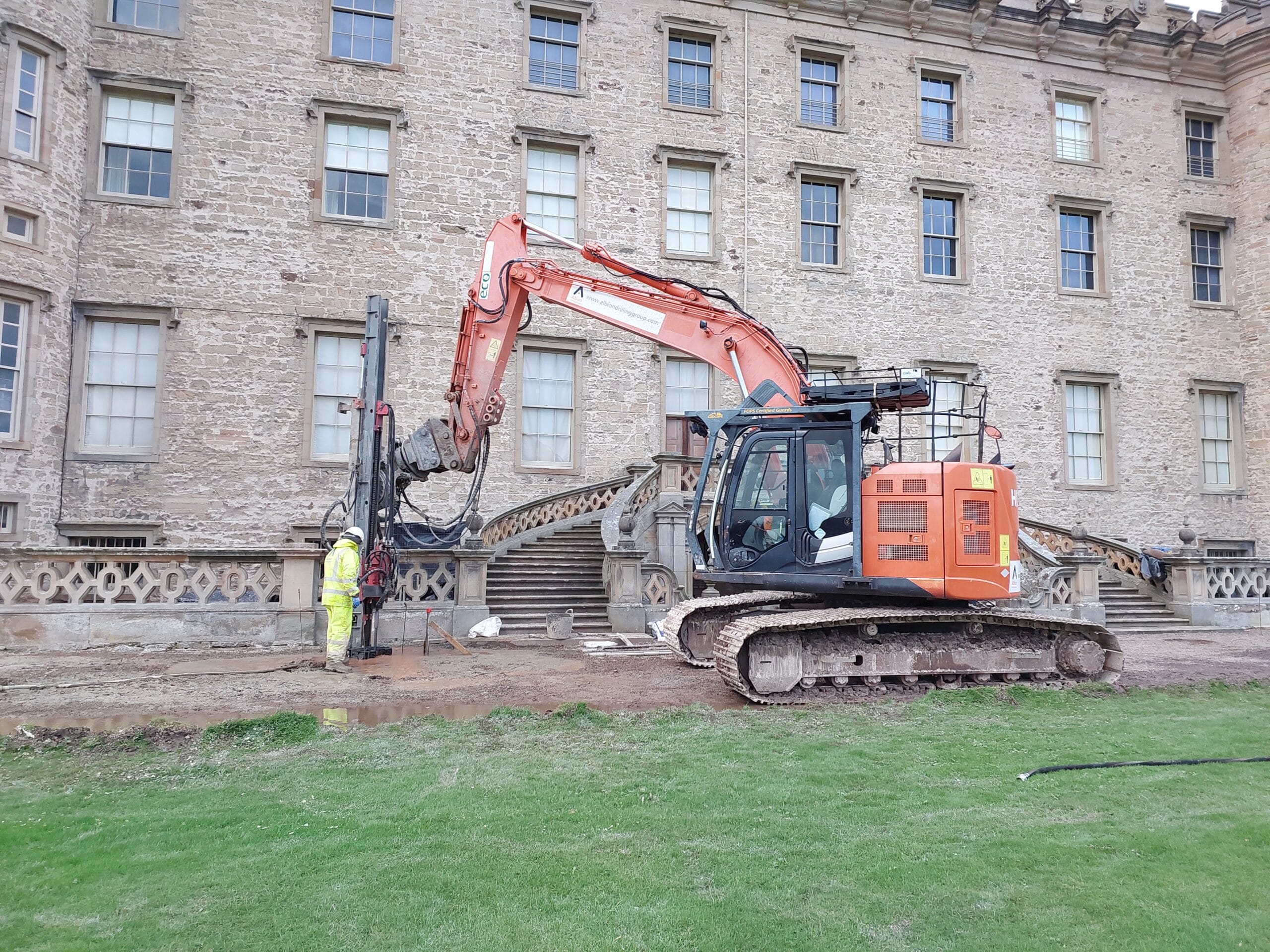
The image above is from late 2025, where the pilings are being driven into the ground to support the scaffolding that was to be built over the months to come. There are almost 150 of these in total, and they are driven down to a depth of six metres into the ground. Cement grout is then poured into the top of the hollow pile, and escapes through apertures in the bottom to fill the shaft and seal the pile in place. The entire project is privately funded, and is anticipated to cost many millions of pounds over 10 years. The scaffolding alone will cost in the region of £3 million.
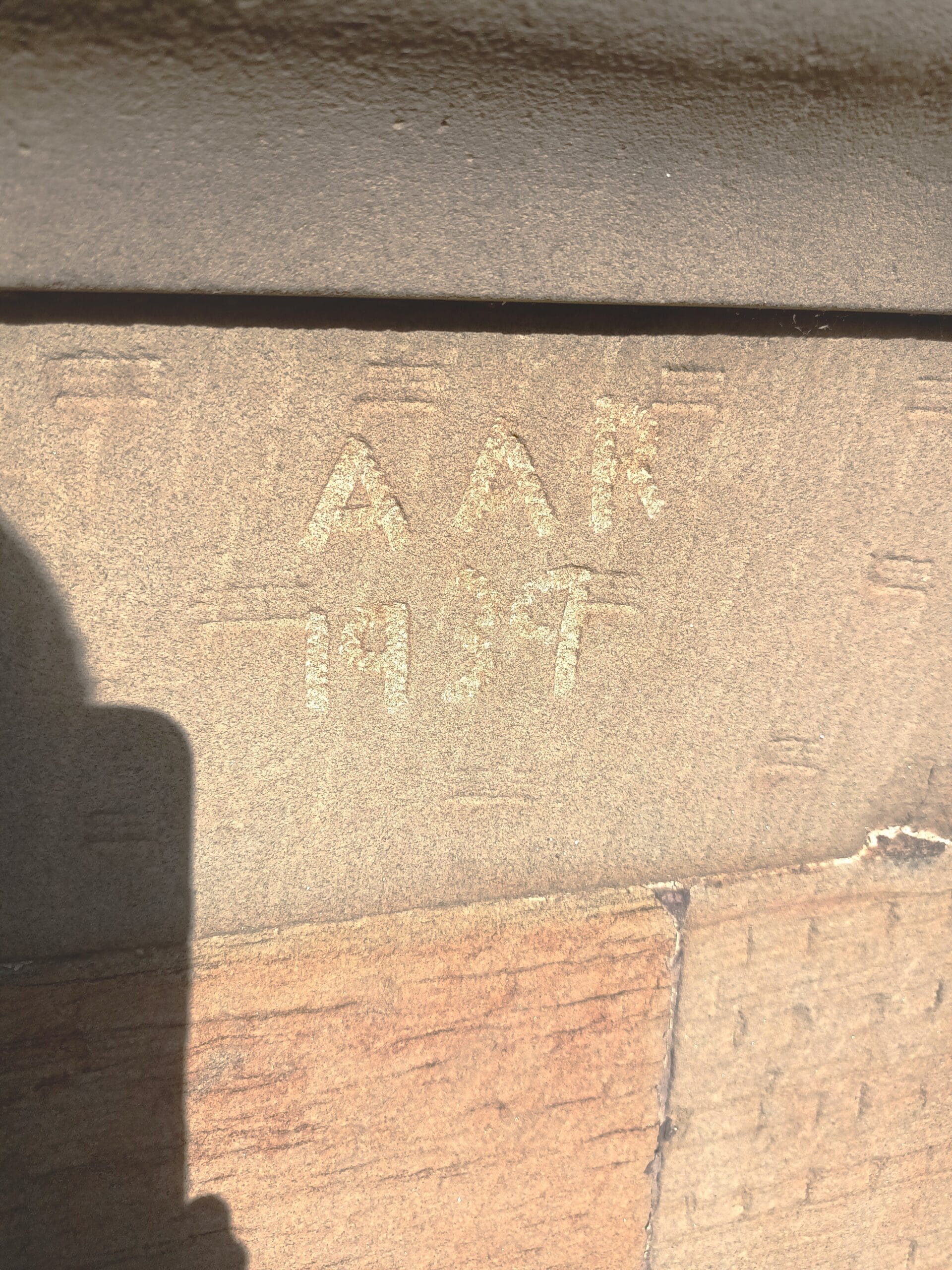
One of the fascinating aspects of the work so far has been discovering previously unknown features that are a product of the marks left behind by some of the many workmen and craftsmen that have been employed in repair and conservation work over the years. One wonders how AAR and RH fared during the turbulent years that followed 1939.
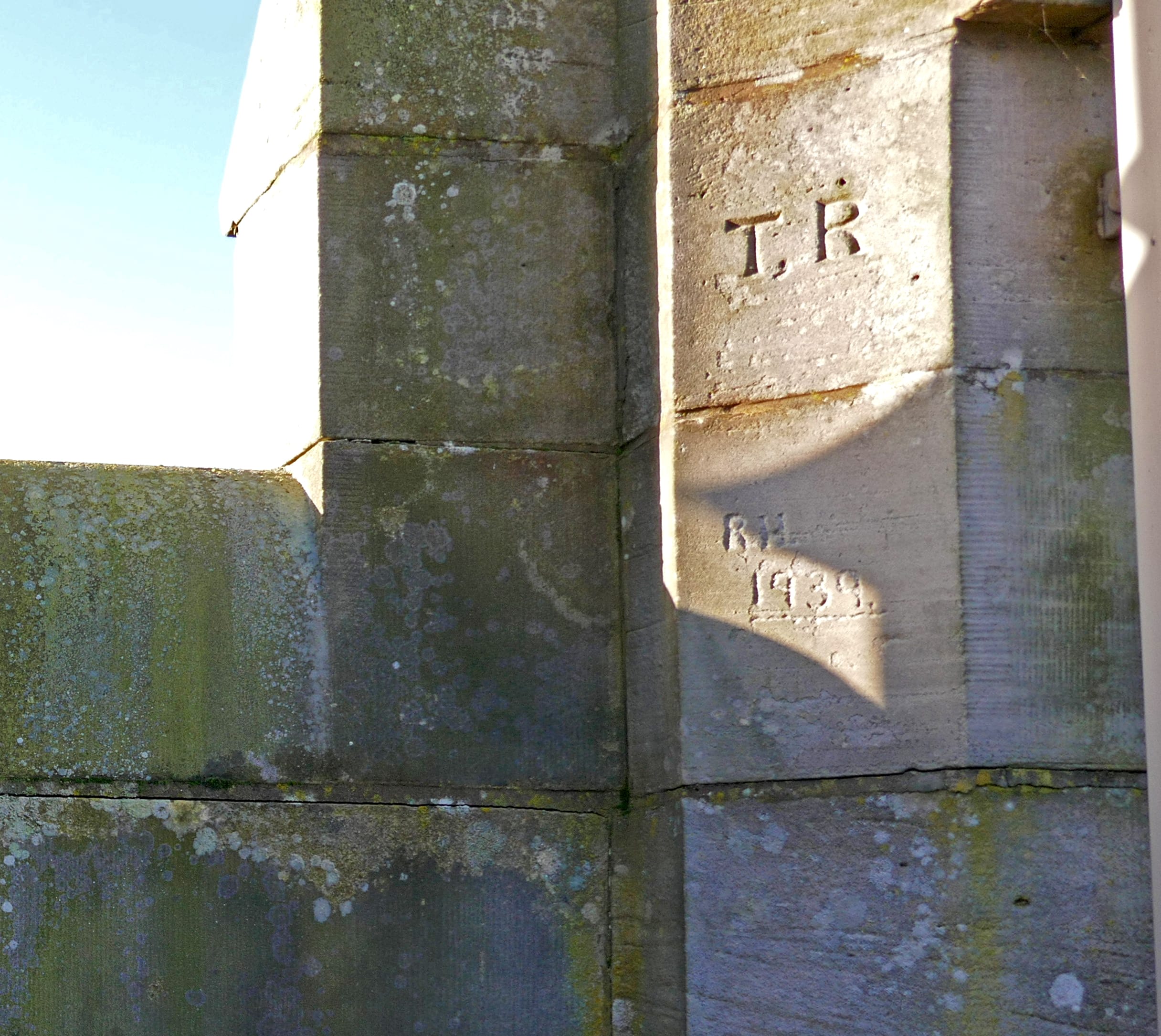
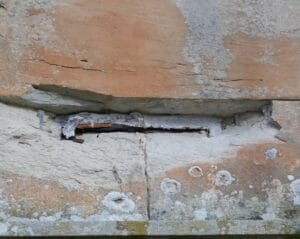 The image to the left shows one of the problems across the high-level stonework on the northern face of the Castle. You can clearly see the effect that time and weather have had on the stone. The sandstone has eroded around the iron cramp connecting two stones. The protective lead coating that encapsulated the cramp is also severely compromised. Where these cramps are found, they will be replaced with stainless steel versions and re-leaded using the original technique used in the 1830s.
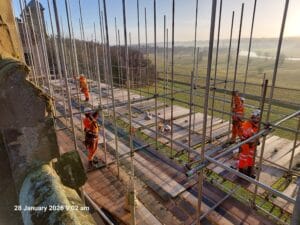 By early January 2026, the scaffold had reached the level of the roof. Some of the conditions that the team were working in were pretty horrendous thanks to the Borders Winter, but there were some good spells too, and the view South from roof level makes it all worth it.
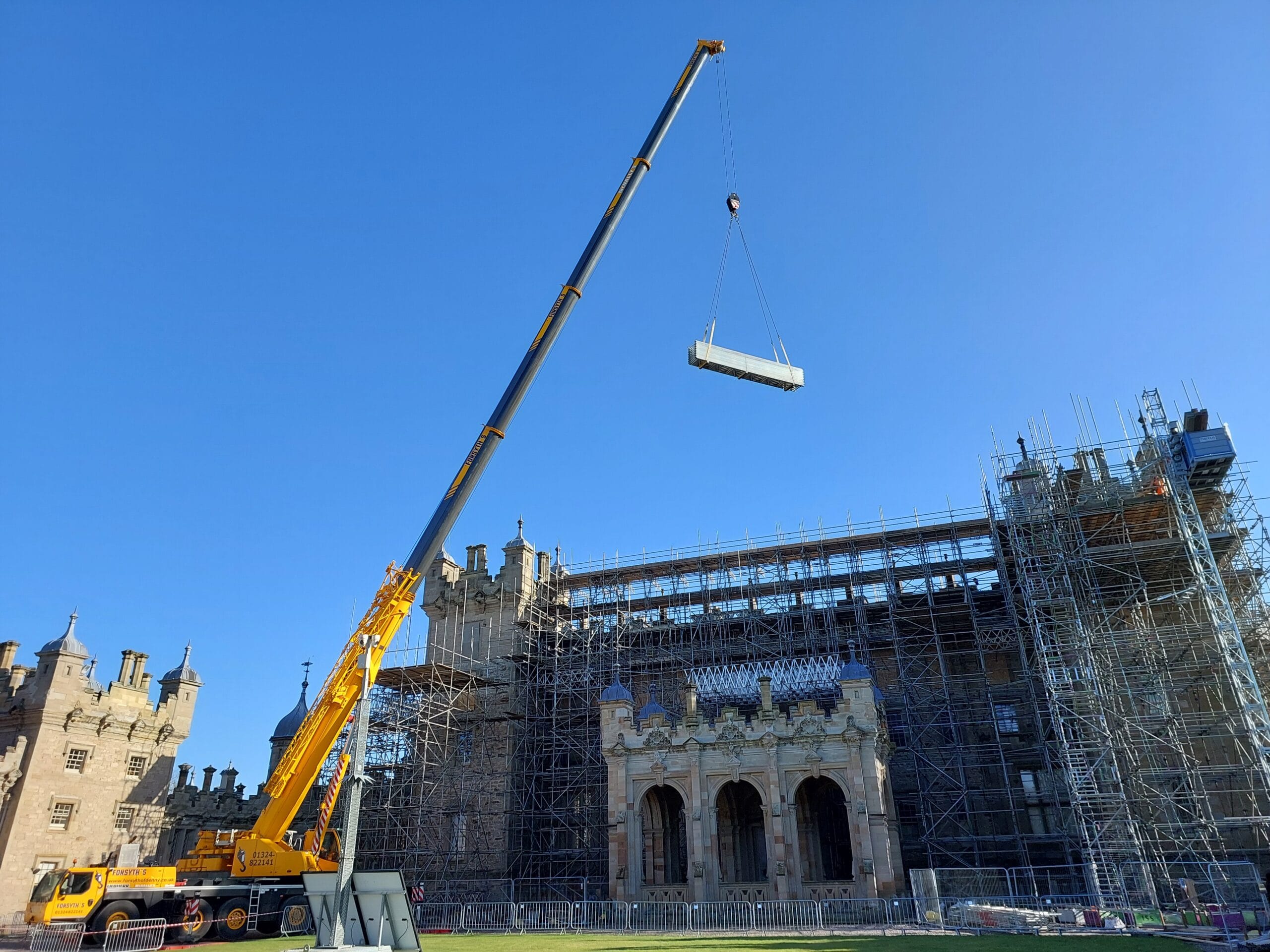
Above is the enormous crane, with a 60-metre telescopic boom, used to facilitate the removal of the apparatus situated on the roof for the lift. The lift was installed in the later 1960s, and the work on the roof has provided the perfect opportunity to conduct the work of replacing it. The main task was removing the cap from the head of the lift shaft. The cap itself was cast in-situ from reinforced concrete and weighed in at approximately 2 tonnes, and the crane had just over 100 tonnes of ballast to lift the cap.
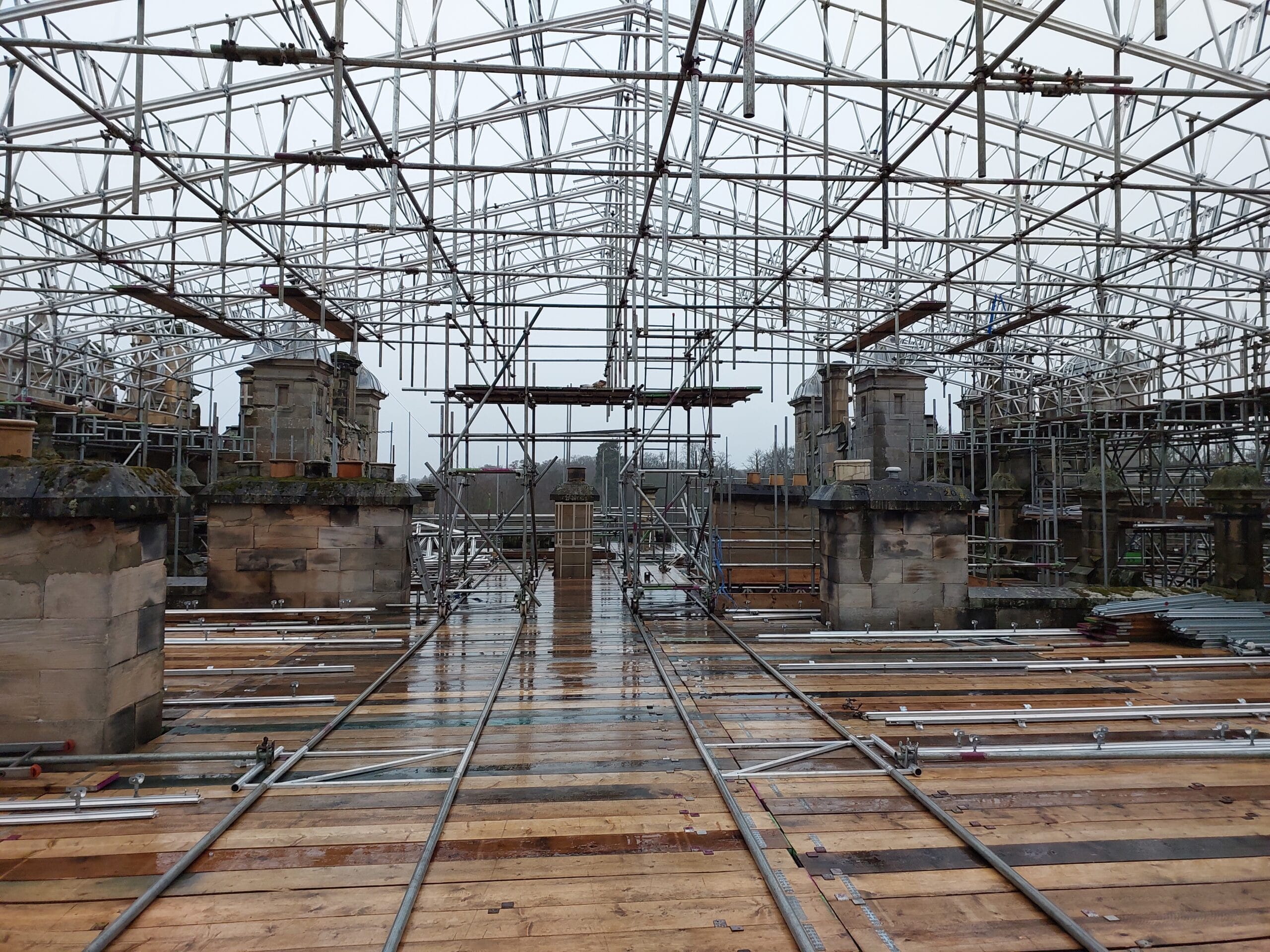
Though it resembles a dancefloor, this temporary surface covering the entirety of the central part of the Castle roof, is in place to allow the team easy movement across the site, and to allow them to install the canopy over the top of the works to protect them and the site from the weather. The towers visible in the background of this image will be addressed first, followed by the chimney visible at the centre of the image. The canopy will then be installed and the flooring removed to allow work to continue on the main roof.
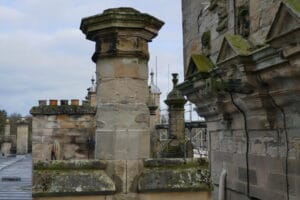
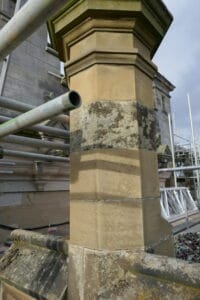
These images show the variety of different issues faced by the team in terms of the stonework they will encounter during this phase of the project. It comes from almost 150 years of reactive repairs and conservation work. These two identical features have fared quite differently over the years. The left hand image shows the face of the sandstone blocks spalling away from the main structure. This happens due to a process of soaking and drying, over time crystallising salts within the sandstone, which then expand and separate the sturcture in layers.
The right hand image shows an identical feature which was dismantled in the latter part of the 19th century, recarved and reassembled using one of the original blocks of sandstone.
Work will begin on the fabric of the roof in earnest in May 2026. We will keep providing updates on progress, problems and discoveries as the project progresses.