

What does it take to grow the Gardens at Floors Castle?

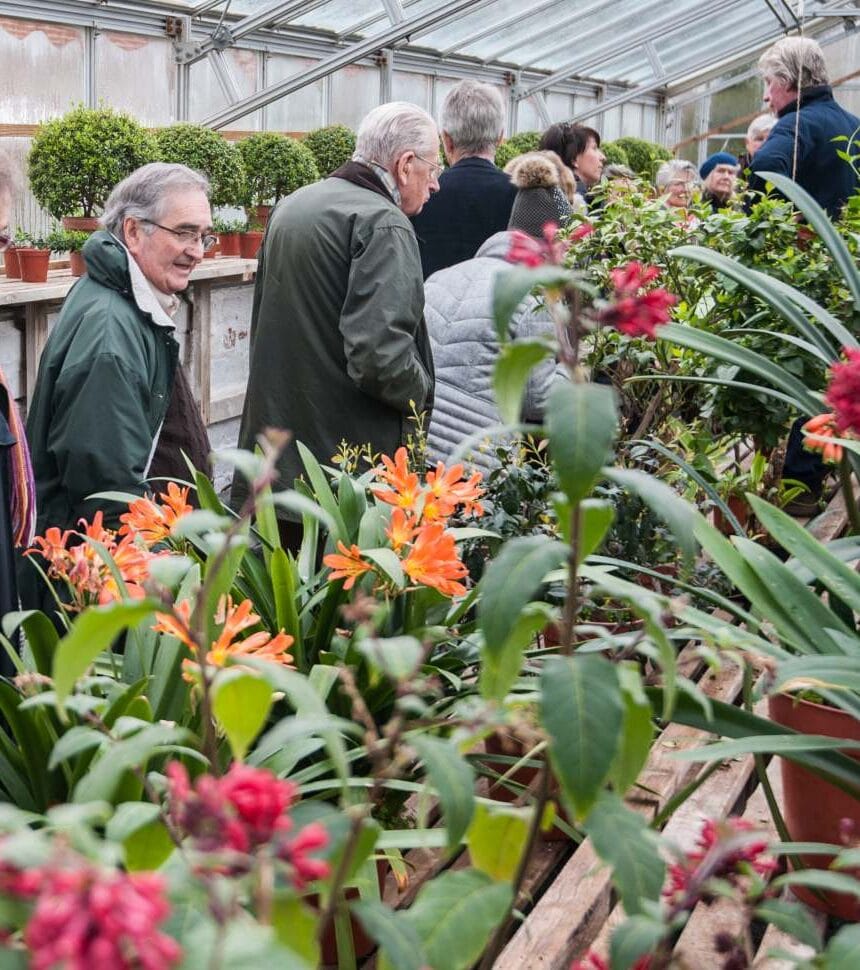
Come behind the scenes with Head of Gardens, Kate McClorey and discover the seasons of hard work that go into creating the magic of the Castle Gardens.
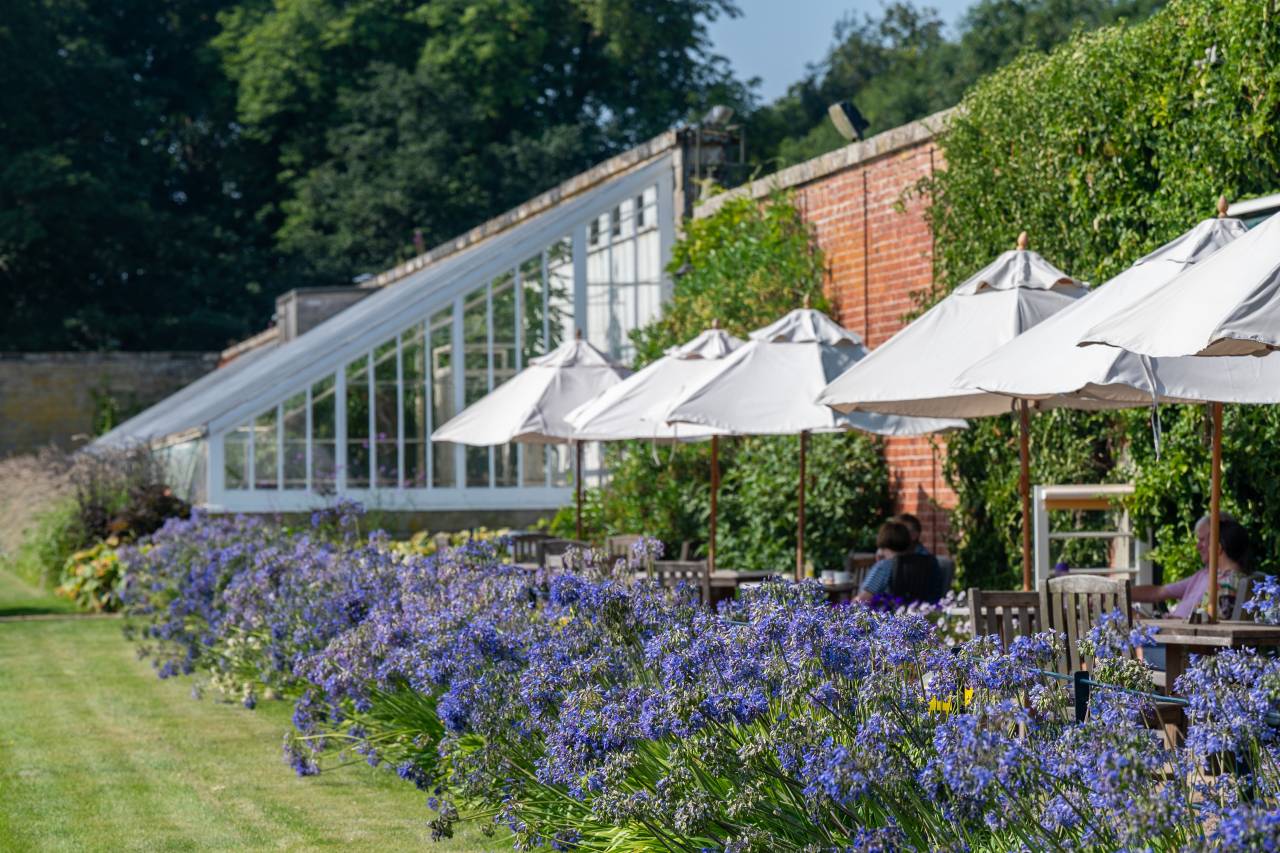
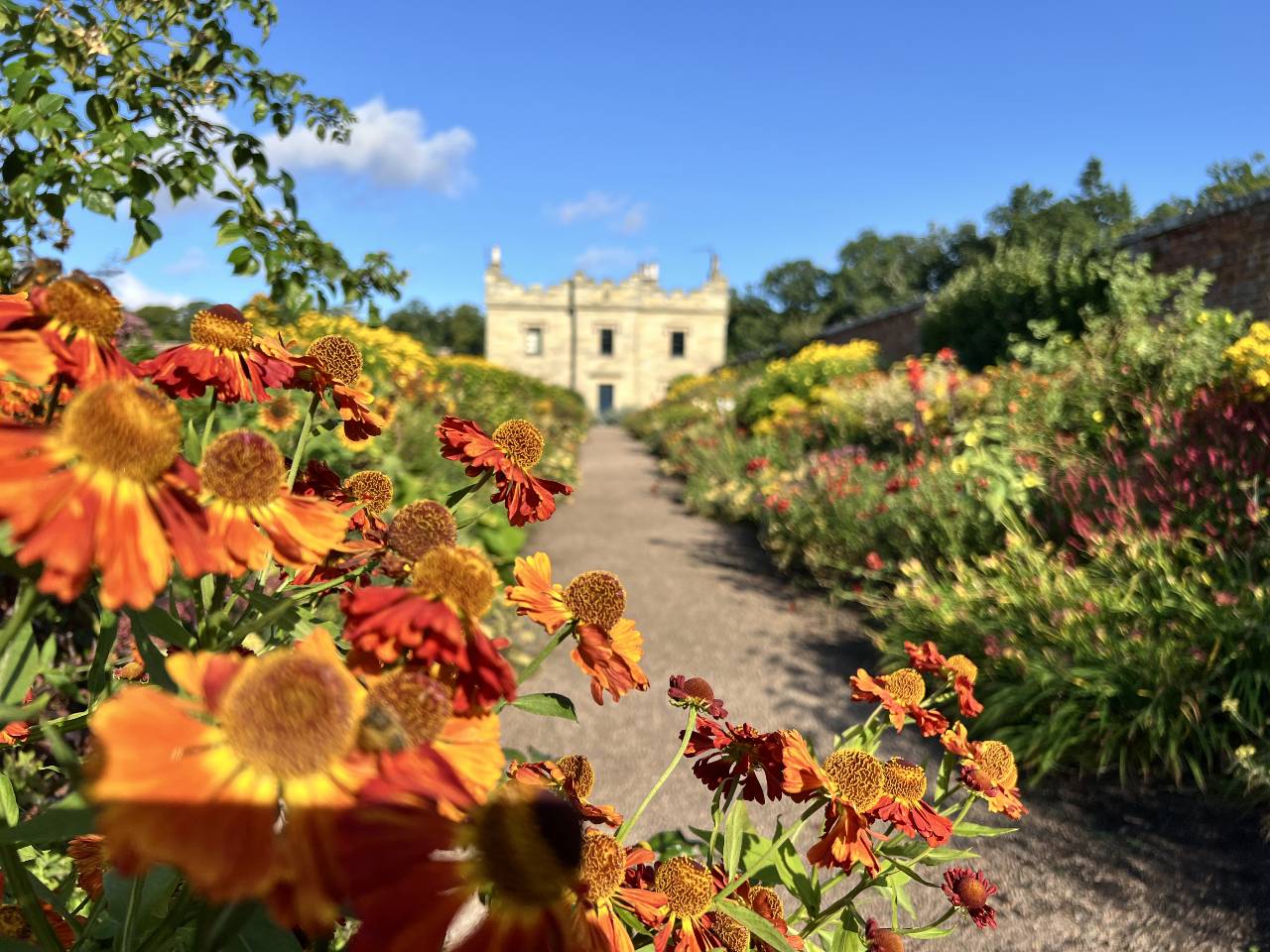
Visitors to Floors Castle Gardens often arrive with a sense of wonder. They stroll through colourful borders, admire immaculate lawns, bathe in the Mediterranean-like warmth of the vine-rich greenhouses, and inhale the air beneath fruit-laden trees before pausing to take in the beauty of the Victorian Walled Garden. It is easy to assume that the gardens simply bloom into life each year, as if by magic. The reality is rather different.
Behind every flower, vegetable, rose and glasshouse display is a year-round programme of planning, propagation, pruning, planting and care, carried out by a small team of dedicated gardeners whose work often begins months before visitors see the results. Nearly every plant at Floors is grown from seed.
To discover what really goes into maintaining one of Scotland’s most celebrated gardens, we spoke to Head of Gardens, Kate McClorey, about the people, processes and passion that keep Floors Castle flourishing.
A small team caring for a remarkable space
Many visitors are surprised to learn that the gardens are maintained by a core team of just four full-time staff.
Alongside Kate are Simon, the Head of Horticulture, who oversees the glasshouses, Mark, who manages the kitchen garden and vegetable production, and Denis, who works across the ornamental gardens, while also supporting our new Star Plantation woodland planting project.
The team is joined by Kirsty, a WRAGS (Work and Retrain as a Gardener Scheme) trainee. The programme helps people changing careers gain practical horticultural experience while studying towards recognised qualifications.
This was how Kate herself started her career at Floors, completing the WRAGS scheme at Floors Castle before progressing to finally become Head of Gardens.
Every week around 15 volunteers join the efforts, providing a few hours of support to help with weeding, deadheading and keeping the gardens looking their best.
“They make such a difference,” says Kate. “Without them, there’s only four of us and we simply couldn’t keep on top of everything.”
And there really is a lot to keep on top of…
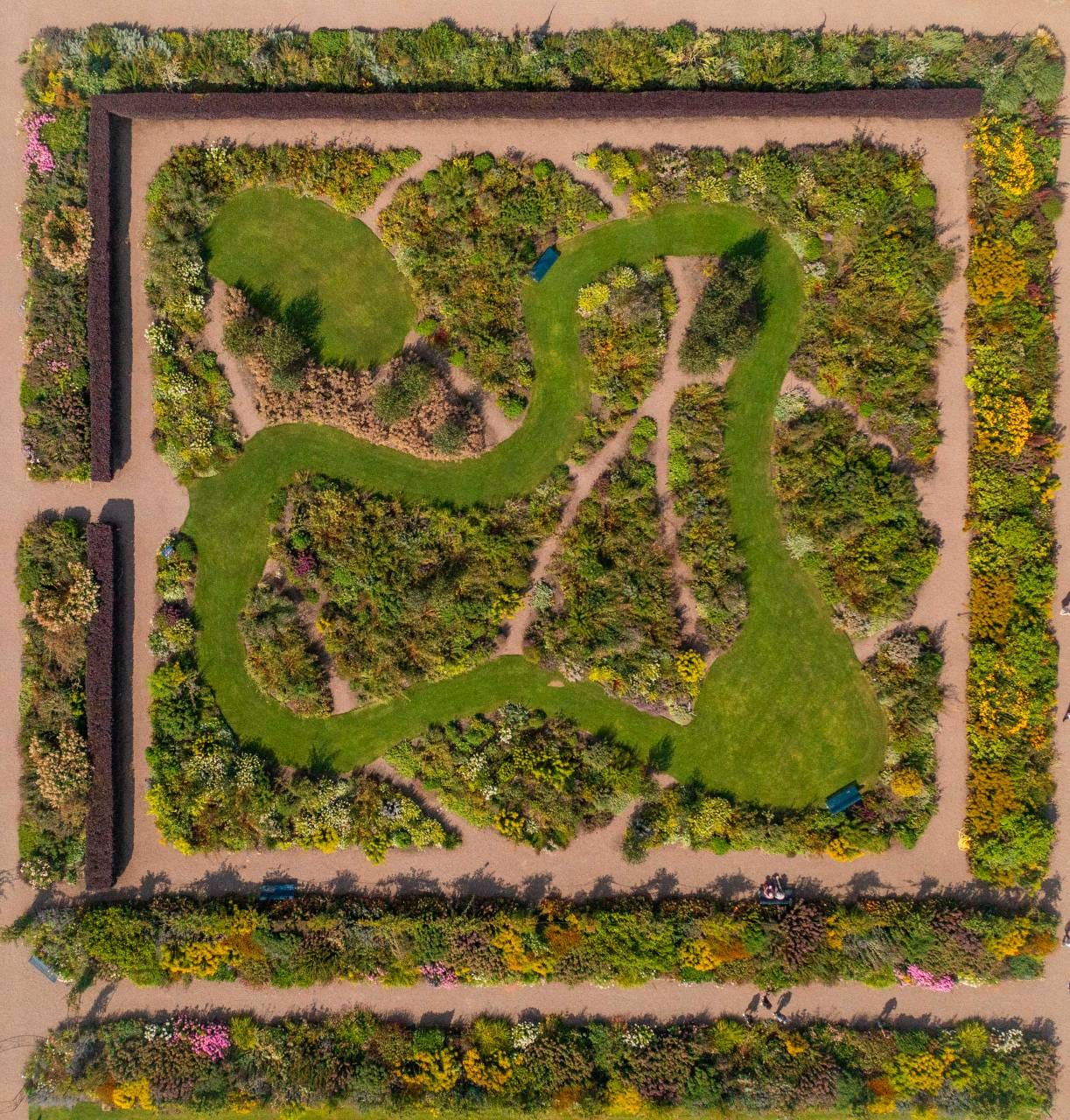
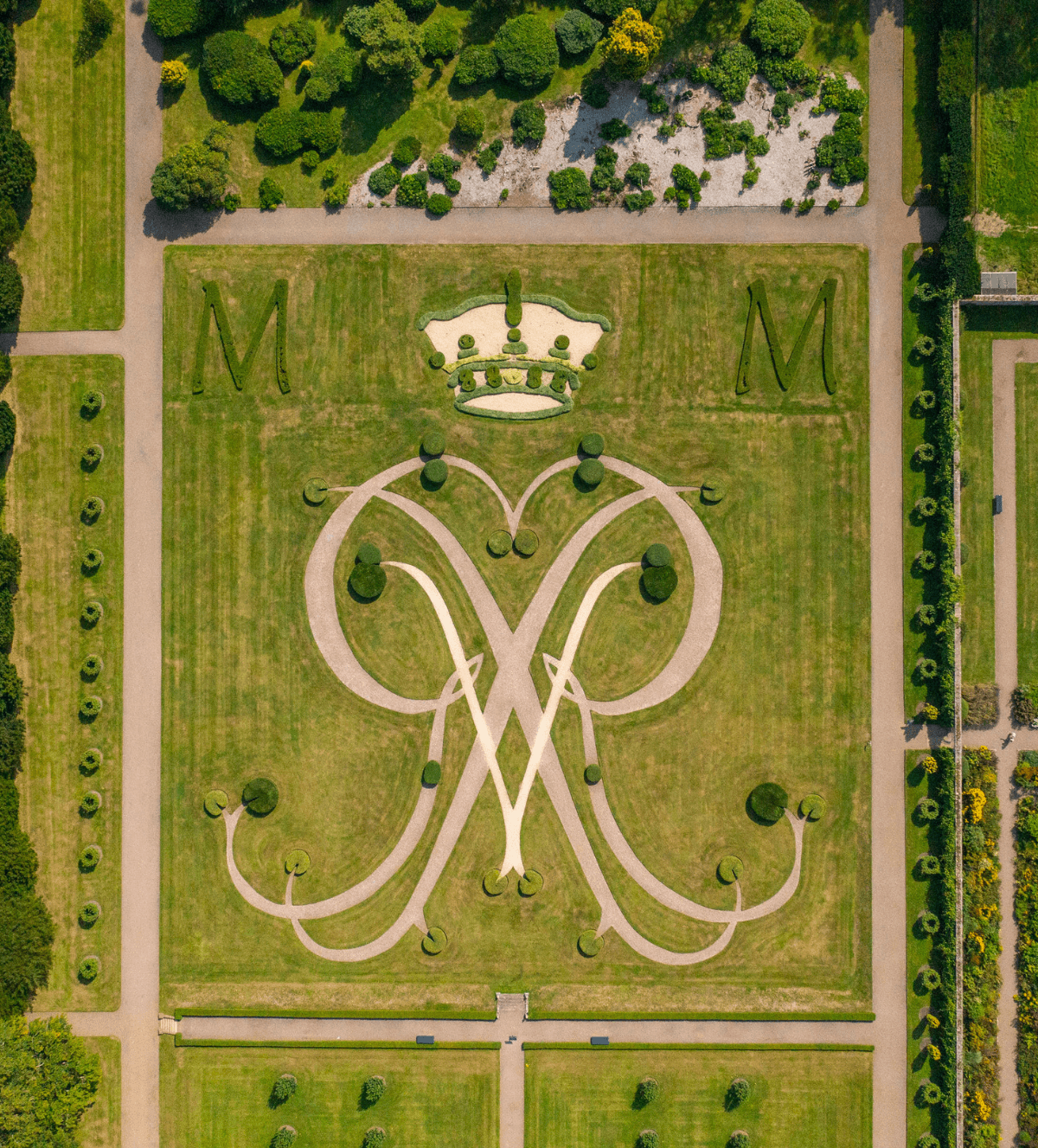
Floors is blessed with acres of gardens, including the Walled Garden and Millenium Garden, as well as all of the Glasshouses, the Grounds, the Castle itself and the Duke and Duchess of Roxburghe’s private gardens.
No such thing as a typical day
The gardening team begins work at 7.30am.
The first task is always the same: checking the glasshouses.
Plants grown under glass can dry out quickly, particularly during warmer weather, so watering and ventilation are checked before anything else. From there, the team walks the gardens, looking for damage caused by weather, wildlife or unexpected visitors.
Only then do they begin the day’s planned tasks.
Depending on the season, this might involve planting vegetables, sowing seeds, weeding borders, pruning fruit trees, lifting bulbs, preparing displays, watering containers, conducting garden tours or harvesting produce.
One day, the team may be planting hundreds of vegetables in the kitchen garden. On another, they may spend hours carefully deadheading flowering displays or restoring order to a busy border.
One thing remains constant: planning.
“We’re always looking about three months ahead,” explains Kate.
While visitors enjoy summer colour, the team is already thinking about autumn bulbs, next year’s planting schemes and how displays can be improved. Photographs are taken, notes are recorded and ideas are sketched out for future seasons.
Kate even keeps a series of Moleskine notebooks documenting daily work, observations and plans. Four notebooks later, they have become a valuable record of the garden’s development.
Growing beauty from seed
One of the most surprising aspects of the gardens is how much is grown on site.
Visitors admire foxgloves, salvias, sunflowers and bedding displays without realising that many began life as tiny seeds in the glasshouses months earlier.
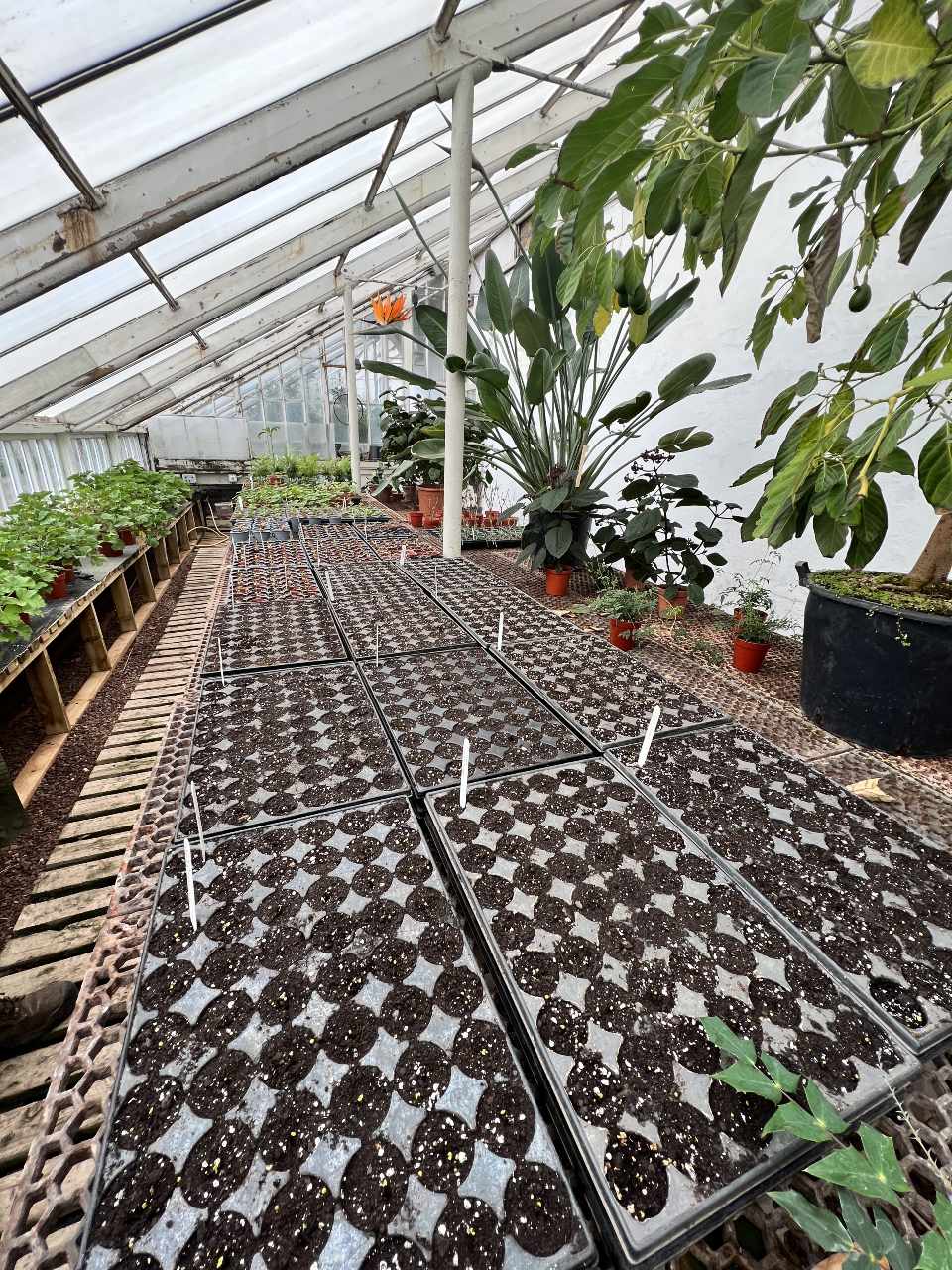
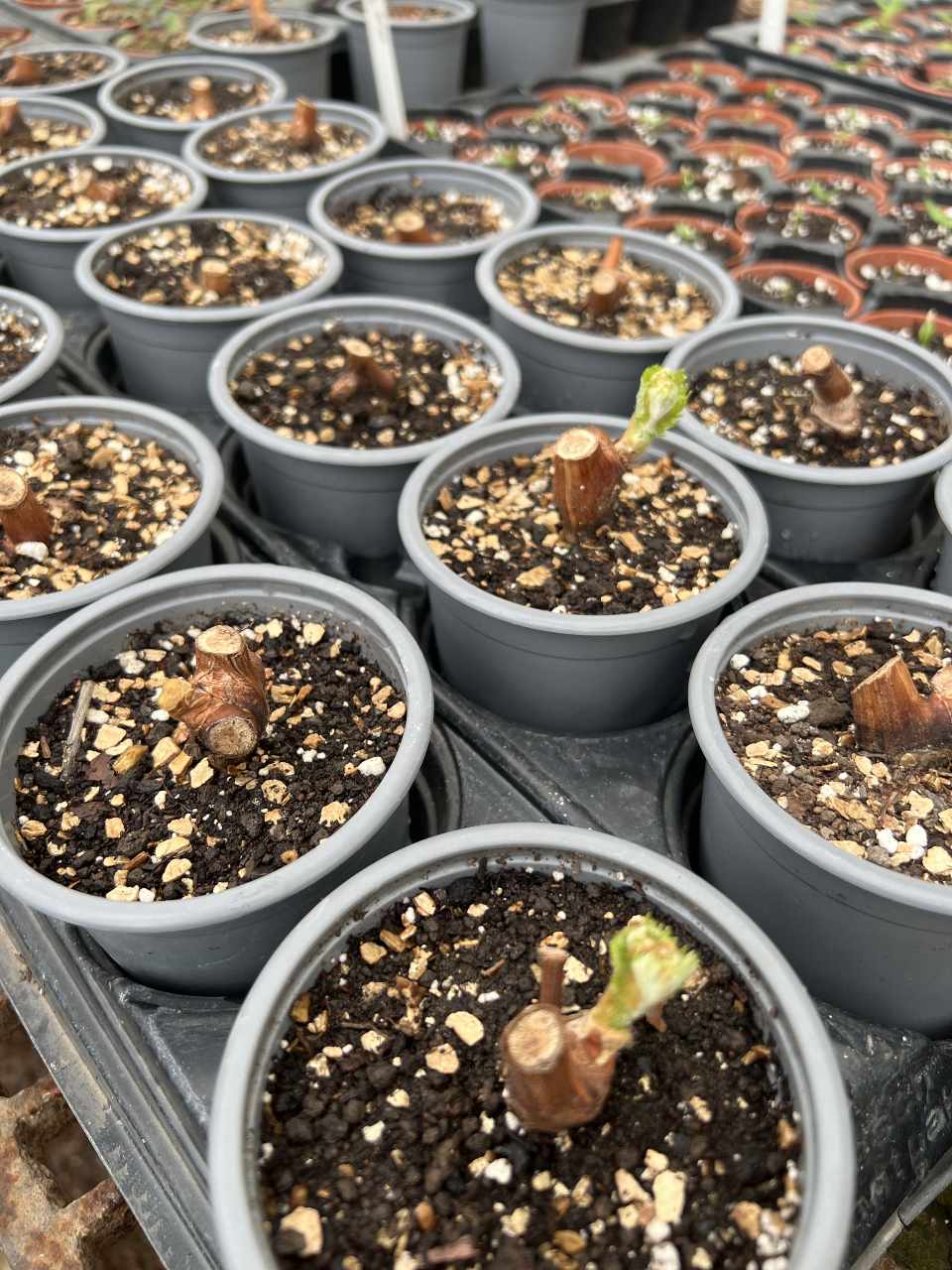
Throughout spring, the glasshouses fill with seed trays and young plants. Thousands of seedlings are propagated, pricked out, potted on and nurtured before eventually finding their place in the gardens.
A single variety may involve dozens of trays and hundreds of plants. Multiply that across the entire garden and the scale becomes impressive.
“We grow almost everything ourselves from seed, cuttings or propagation,” says Kate.
It’s a process she still finds magical.
“You scatter these tiny little seeds onto compost and suddenly you’ve got these enormous plants. I still find that amazing.”
Gardening through the seasons
While summer often receives the most attention from visitors, every season plays an important role. Kate explains the systematic tasks for each season that ensure year-round splendour for visitors…
Winter is about preparing for the year ahead
Far from being a quiet period, winter is arguably the busiest season.
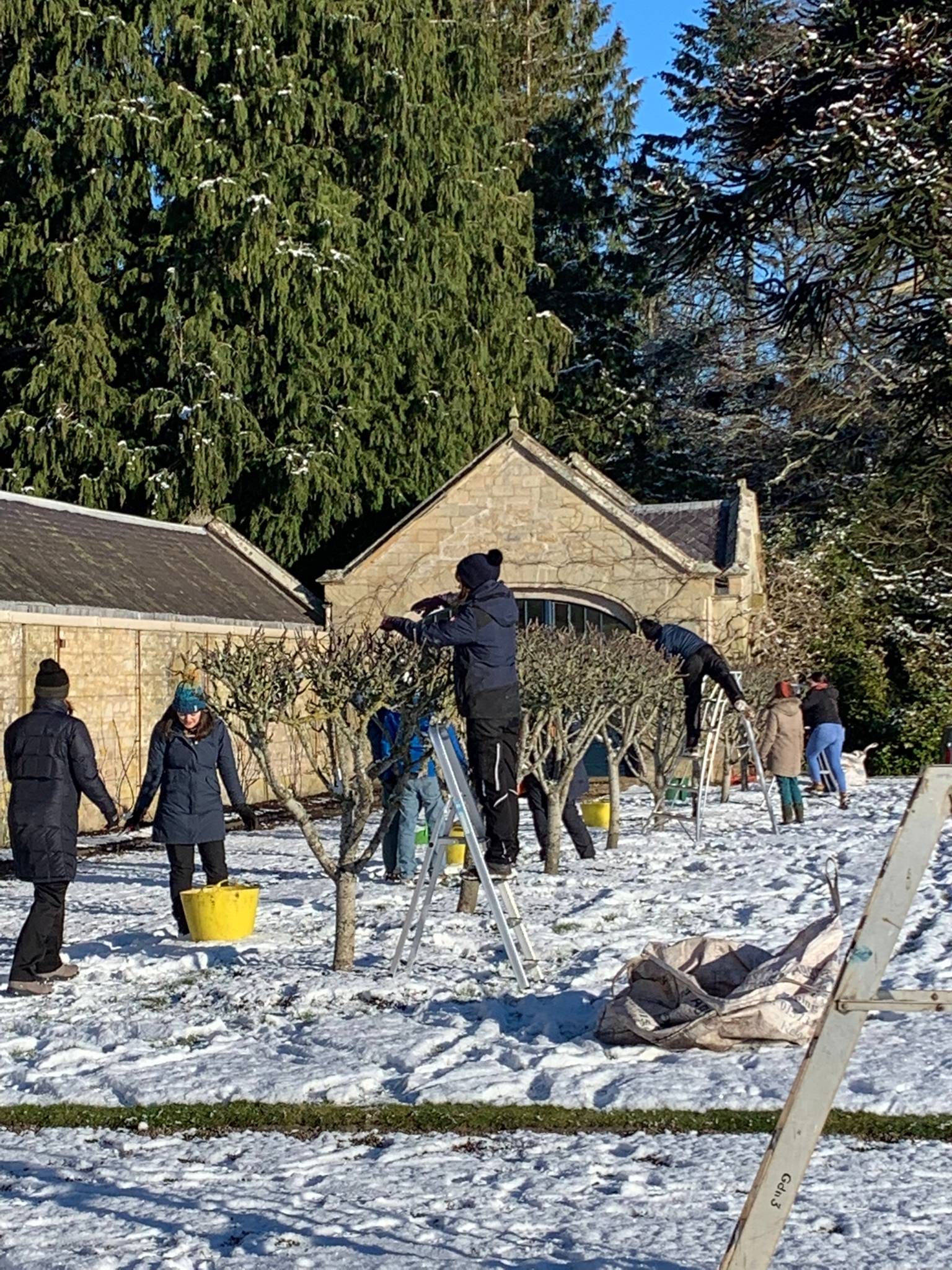
Thousands of bulbs are planted. Herbaceous borders are cut back by hand. Compost and organic matter are barrowed across the garden and spread onto beds. Roses are removed from their supports, pruned and carefully tied back into place. Fruit trees are shaped and maintained.
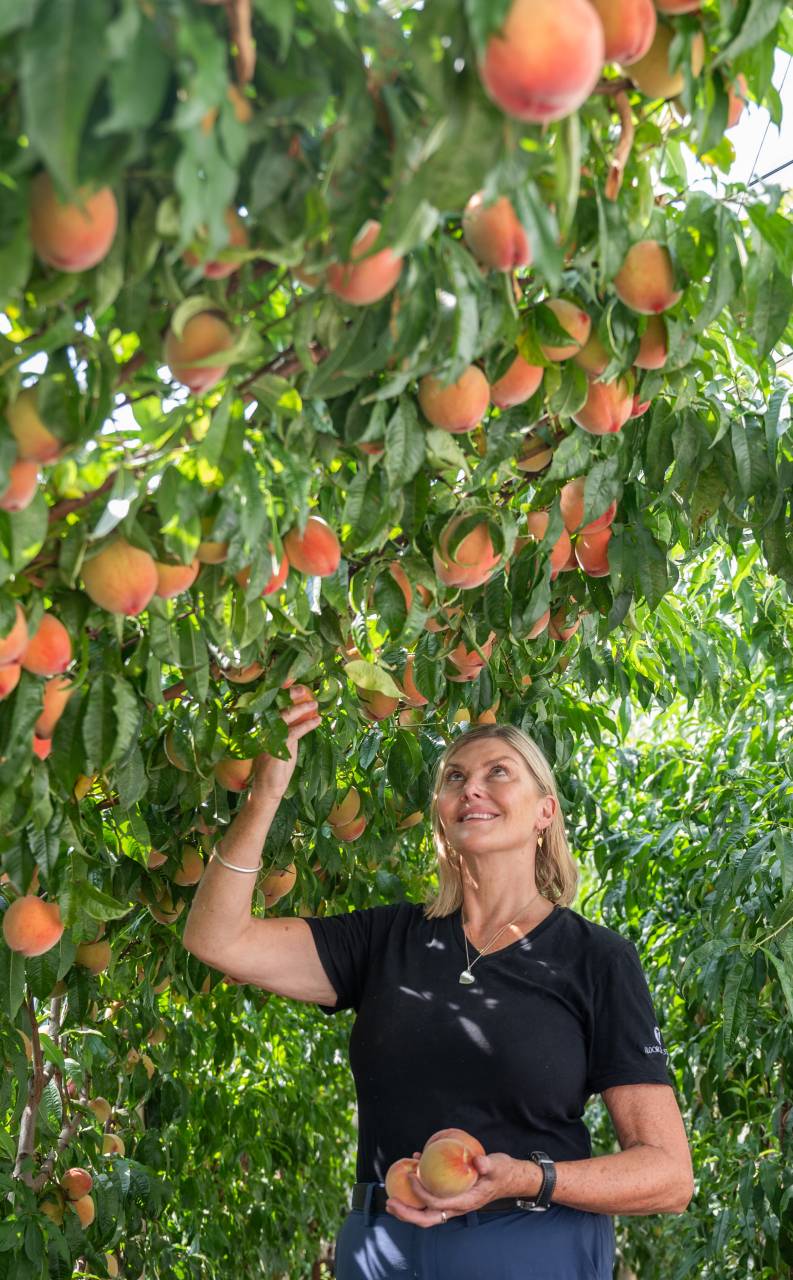
The glasshouses require equal attention. Grapevines are pruned and cleaned, peach trees are trained using traditional Victorian methods, and countless preparations are made for the growing season ahead.
If these jobs are not completed properly, the impact can be seen throughout the following year.
Spring is the season of propagation
As winter fades, the focus turns to sowing and growing.
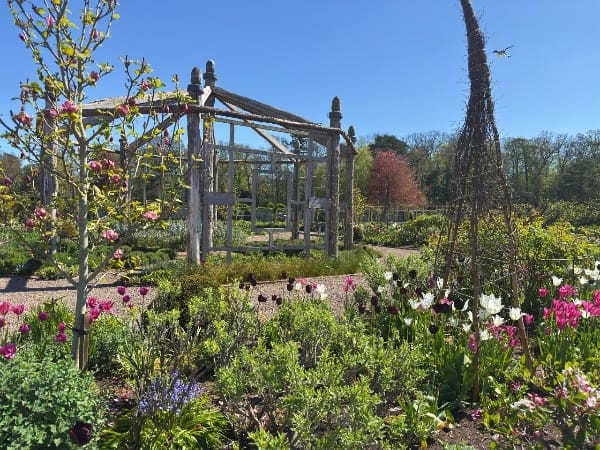
Glasshouses fill with seedlings. Young plants are potted on and prepared for life outdoors. Final pruning takes place and the first vegetables begin their journey from seed tray to kitchen garden.
The garden begins waking up once again.
Summer is about colour, growth and care
Summer brings the displays visitors know and love.
Tender plants such as dahlias and cannas are planted out, containers are filled, vegetables thrive and borders burst into colour.
It is also a season of constant maintenance.
Plants are staked, watered, fed and deadheaded. The team uses organic growing methods throughout the gardens, relying on healthy soils, companion planting and natural feeds made from ingredients such as nettles and comfrey.
The result is not only beautiful planting, but a noticeable increase in wildlife throughout the gardens.
Autumn is the time for harvest and Castle dressing
Autumn holds dual responsibilities for the Gardens team. It is both harvest season and shooting season, where parties of guests attend the Castle and the Gardens team dress the property meticulously.
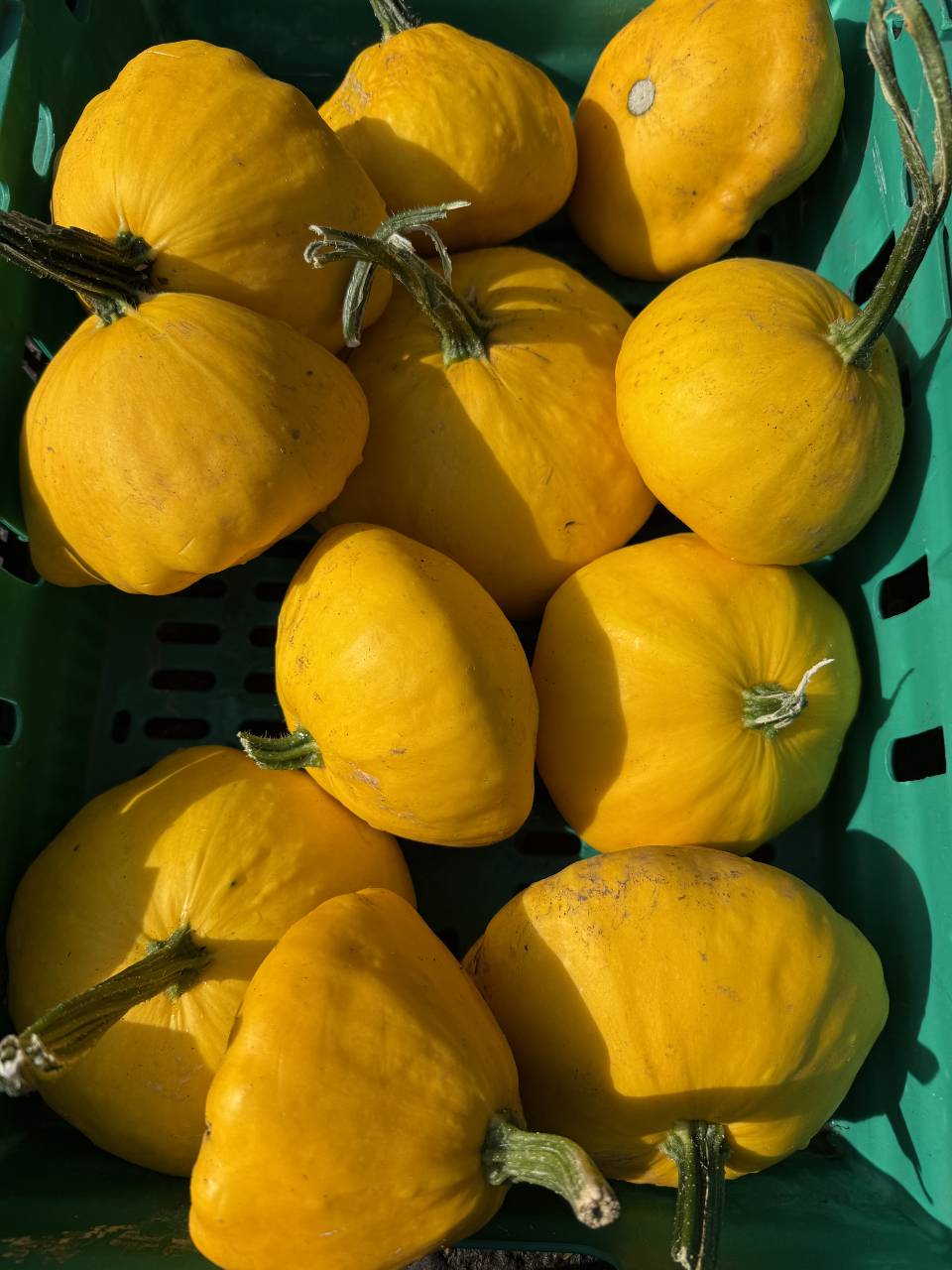
During the harvest, apples are gathered for cider production, pears are picked and vegetables continue to be harvested from the kitchen garden.
In the Castle, dozens of floral displays are created to decorate bedrooms, public rooms and reception spaces throughout.
Fresh flowers are arranged, large specimen plants are positioned and every detail is carefully considered to create a memorable experience for guests.


Respecting history and nature
One of the challenges facing the team is balancing our Victorian heritage with change.
As a Victorian Walled Garden, Floors Castle has a strong historic identity. Yet changing weather patterns are already affecting what can be grown successfully. Some traditional herbaceous plants struggle with increasingly dry springs, requiring the team to carefully consider alternative planting choices.
At the same time, Kate is passionate about preserving the character of the garden while ensuring it continues to thrive as an evolving place of interest.
“We want visitors to recognise it as a Victorian garden, but we also need to adapt and move it forward.”
The many returning visitors to the gardens enjoy seeing new developments, and Kate is keen to ensure their interests are supported by variety and by curious and creative displays.
It’s a careful balancing act between heritage, horticulture and the realities of a changing climate.
A living work of art
It’s a good job then that Kate’s passion lies within designing the garden.
She describes the garden as a painting, constantly adjusting colours, textures and planting combinations to create impact and interest.
Whether it’s introducing ribbons of pink salvias through blue borders or combining ornamental planting with productive crops, the aim is always to inspire visitors.
“I want people to walk in and think, ‘Oh wow, that looks beautiful. I could do that at home.'”
Perhaps that is what makes Floors Castle’s Gardens so special.
They are not simply collections of plants. They are living, evolving spaces shaped by creativity, skill and an extraordinary amount of hard work.
So the next time you visit and find yourself admiring the roses, the borders or the vegetables growing in perfect rows, why not take a moment to think about the people and the processes behind them? Because while the gardens may look effortless, there is a dedicated team working every day to make that magic happen.